Nearly nine in 10 travel advisors have encountered clients armed with AI-generated research, according to a recent survey. More often than not these polished itineraries contain impossible connections, unrealistic budgets, even fictional hotels.
Qatar’s visitor numbers are recovering on road traffic across the Saudi border, while air arrivals keep falling. Drive-in visitors tend to make shorter trips, which limits how much they can do for hotels.
There's been speculation for years about whether Airbnb would launch flights. Such small-minded speculation: Airbnb intends to use specialized AI agents to do every travel vertical.
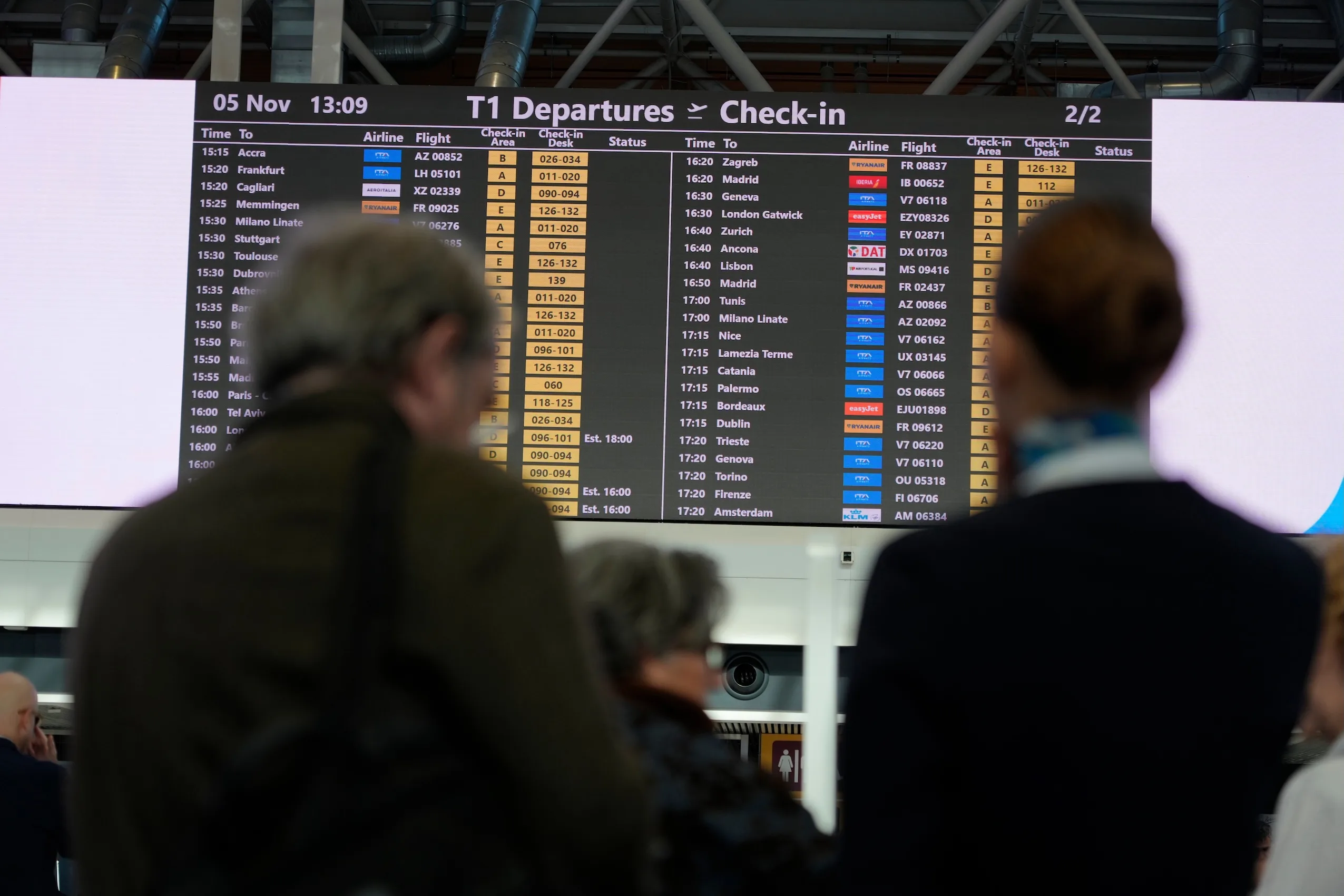
MILAN — Multiple flights in Europe were targeted by bomb threats on Thursday, forcing emergency landings, searches and military escorts to airports in France, Italy and Bulgaria. A British official called them “malicious hoaxes” that followed another rash of hoax threats earlier this week.
Mateys, we have come across a bargain holiday to Corfu, from only £244 for a 4-night stay at the highly rated 3⭐️ Oula Maisonettes. ☀️The hotel is tucked away in a quieter part of town, about a 15–20 minute stroll from the main Kavos strip.
Learn how to redeem World of Hyatt points for free hotel nights, room upgrades, experiences and more, plus which redemption options offer the best value.
An Airbus A320 bound for Rome has made an emergency landing in Evreux, France. The prime minister's office said it was diverted after receiving a bomb threat.
Crete is well known for its beautiful beaches, all-inclusive resorts and lively nightlife, but the largest Greek island also home to a rugged coastline, pretty mountain villages and historical ruins.
It’s time for a new codeshare, with British Airways choosing to codeshare with Mexican airline Viva, giving passengers greater choice and connectivity when travelling between Mexico, the UK and Europe. Through the new agreement, British Airways customers will…
The fall 2027 opening will mark Club Med’s return to U.S. shores and will also introduce the brand’s second Exclusive Collection resort in North America, along with Club Med Quebec Charlevoix
Radisson, Wyndham, Tamara and Alivaa are adding rooms in religious destinations, betting on domestic travel. But short stays and modest room rates can limit returns for mid-market hotels.
I fly planes into one of the world's most challenging airports to land. Tradewind Aviation, Mariette Williams Mike Stein is one of 31 Tradewind Aviation captains qualified to fly passengers into St.
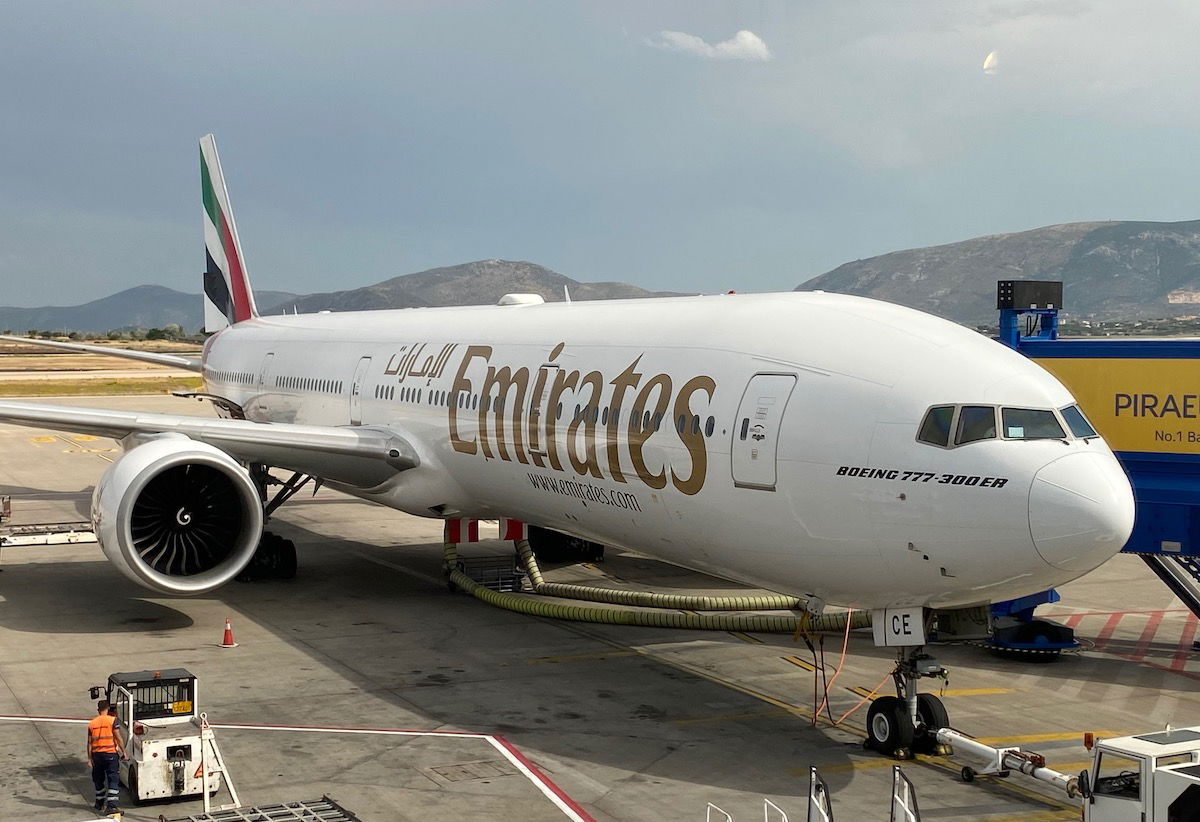
Emirates' half-year profit fell by around two-thirds amid the Iran conflict, but the airline still earned roughly $1 billion, and the results look far better than expected.
A mild microclimate, an exciting locavore food scene and a distinct Mediterranean look make this seaside town a must-visit destination, says Hayley Spencer
The EU Sustainable Tourism Strategy sits on top of existing tourism strategies released by the economic bloc’s Commission. But it still falls short of presenting measurable targets that would actually support its implementation.
Italian, French and Bulgarian fighter jets were scrambled today as at least 14 European flights - including an Aer Lingus flight from Dublin - were hit by hoax bomb alerts for the third day this week.
Mumbai International Airport Limited has denied summer schedule slots to West Asia airlines (excluding those from Dubai and Abu Dhabi) as it prepares to move flights on fourteen foreign routes to Navi Mumbai airport.
United MileagePlus miles can be redeemed for high-value flights, including premium cabins to destinations like Tokyo, Europe, South Africa, Singapore and Australia.
Alaska Airlines is dramatically expanding its premium offering, unveiling its new Aurora experience for Boeing 787 Dreamliners and select Boeing 737 MAX 10 aircraft.
IndiGo Airlines on Friday issued a travel advisory alerting passengers that flight operations at Rajiv Gandhi International Airport in Hyderabad have been impacted due to low visibility caused by adverse morning weather conditions.
Singapore Airlines is preparing to operate its Airbus A350-900ULRs with just 132 seats, the same sort of capacity that you would typically find aboard an Airbus A220-300.
A Delhi passenger who missed a Bengaluru-bound flight after alleging delays by airline staff has been awarded ₹71,587 by the New Delhi District Consumer Disputes Redressal Commission.
Earned Maharaja Points can be redeemed towards Award Flights and Cabin Upgrades on Air India Air India expands rewards programme: Earn flight points while shopping online.
Flights across Europe have been diverted, grounded and escorted by fighter jets in response to a wave of bomb threats, marking a second major outbreak of false alerts in less than a week.
TORONTO — A lot of work goes into crafting a well thought out travel itinerary. Travel advisors can spend hours researching accommodations, coordinating budgets and logistics, booking flights and curating experiences to match each client’s preferences.
Imagine, then, the frustration of having a client arrive with their own research and AI-generated itinerary that looks impressive on screen but falls apart when it comes time to book.
That is one of the key findings from Goway’s recent Confessions of a Travel Advisor Survey, which asked 1,600 travel advisors across North America to share their experiences. The survey found that 89% of respondents have had clients arrive with their own AI research, while 14% identified the “I researched this on AI” planner as among the most challenging types of clients to work with.
From impossible itineraries and made-up recommendations to budgets that bear little resemblance to real travel costs, the findings highlight a growing challenge for advisors as generative AI becomes part of how consumers research their holidays. Travellers who once arrived with a destination in mind may now come equipped with a detailed itinerary, suggested hotels and an estimated budget generated in seconds.
For Dan Christian, host and founder of the Travel Trends podcast, the speed at which AI produces these plans is a major factor in shaping expectations.
“The biggest shift is how quickly an idea becomes an expectation. Someone asks ChatGPT to plan a two-week trip, and seconds later they have this beautifully presented itinerary with hotels, restaurants and a budget. You can understand why they get excited. The challenge comes when they take that to an advisor and discover that the price isn’t realistic, the connections don’t work or some of the recommendations can’t be booked.”
According to Goway’s survey results, advisors are encountering three recurring problems with AI-generated travel plans: itineraries that ignore geography and logistics, recommendations for places or services that do not exist and budgets that are unrealistic.
The most common complaint is that AI plans trips without accounting for the realities of travel. An itinerary might cram several destinations into a few days without considering transfer times, flight connections, opening hours or the exhaustion that comes with constantly moving between hotels.
Christian tells Travelweek the problem is that a convincing itinerary is not necessarily a workable one.
“Travel is complicated! Anyone who has put together a multi-day trip knows how many moving parts there are. Change one flight or one hotel, and it can affect everything that follows.”
General-purpose AI tools can generate detailed plans without verifying every connection, opening time or booking condition. Even when a tool has access to current information, that does not guarantee that all the components of an itinerary will work together.
Christian also points to the difference between what is technically possible and what makes for an enjoyable holiday.
“You might be able to visit three cities in five days, but do you want to spend that much of your holiday checking out of hotels and getting to the next one? An experienced advisor knows when to say, ‘Let’s take something out. You’ll enjoy this much more if you slow down.’”
Another concern is ‘AI hallucinations’. One in 10 advisors surveyed by Goway reported outright fabrications, including attractions, hotels, restaurants, flights and transportation routes that do not exist.
Unrealistic pricing is a third recurring issue, with AI suggesting luxury trips at implausibly low prices, first-class airfare well below market rates and multi-country itineraries on budgets that do not reflect the actual cost.
For advisors, correcting these assumptions can take time, particularly when clients have already become attached to the itinerary AI has produced.
Renee Stanton-Defaria, Senior Director of Sales at Goway, says advisors are adapting to the new reality, and that the errors in AI-generated research can reinforce the value of their expertise.
“We’re hearing that advisors are doing well at adjusting to this new reality. In so many cases, the AI research clients bring to advisors is full of errors. This actually boosts the confidence of advisors, becuase whether it was ineffective prompts to start with, or just AI hallucinations, we can still clearly see that the human element is essential.”
Rather than dismissing a client’s AI-generated itinerary, Christian recommends using it as a starting point for a conversation about what the traveller really wants.
“I’d start by saying, ‘Great, show me what you’ve found.’ They’ve just given you a really useful insight into the trip they’re excited about. That’s a good place to begin.”
The next step is to understand what appeals to the client. Is it a particular hotel, the destinations, an experience or the price? Once those priorities are clear, the advisor can explain what needs to change and why.
“I’d give you another night here, change this connection and use a local operator I trust for that experience,” Christian suggests as an example of how an advisor can make their expertise visible through specific recommendations.
He also encourages advisors to be transparent about their use of AI. Rather than positioning themselves against the technology, they can explain how they use it to support their work while making clear that the information still needs to be checked.
“The important thing is how you use it. Asking another AI tool whether the client’s itinerary is correct isn’t enough. Check the details with suppliers, booking systems and people who know the destination.”
Christian also emphasizes the importance of being clear about planning fees. Reviewing a client’s itinerary, verifying assumptions and making the trip workable are professional services, even when the initial research comes from the traveller.
“You don’t have to start again, but you do need to take ownership of what you recommend,” he says.
For Goway, the growing use of AI reinforces the importance of human expertise, particularly in tailor-made travel.
Stanton-Defaria says the company remains confident in its position in the tailor-made travel market, where complex itineraries and individual client needs call for deep destination knowledge.
“Our Destination Specialists will always be able to instill confidence and trust in a way no computer program ever could.”
Christian identifies relationships, judgement and having someone to turn to when something goes wrong as key areas where advisors demonstrate their value.
“Knowing who to call, which operator you trust and who can help when plans change can make an enormous difference to someone’s trip.”
He also points to the importance of understanding the individual traveller. A client may ask for the same holiday their friends enjoyed, but further questions can reveal different priorities and lead to a more suitable recommendation.
Rather than making broad claims about what AI cannot do, Christian encourages advisors to demonstrate their value through real examples, such as helping a family select the right trip, arranging a special experience through a supplier relationship or supporting a client through a disruption.
The goal, he says, is not to reject new technology but to use it to improve service.
“Our Summit theme this year is ‘Beyond AI,’ and for me that means getting past the excitement around the technology and asking what it helps us do better. For an advisor, that could mean less time on routine administration and more time getting to know clients and looking after them.”
As AI becomes a more common part of travel research, advisors may increasingly find themselves refining plans that clients have already started building rather than creating every itinerary from scratch.
For Christian, that shift does not diminish the advisor’s role. It makes the ability to assess information, exercise judgement and deliver on a traveller’s expectations all the more important.
“That’s the future I’m excited about: better tools, stronger relationships and more time for the people we’re here to serve.”
This article originally appears in Travelweek’s Nov. 5 issue. To read the issue, click here.
Cindy is Deputy Editor at Travelweek and has worked for the company since 2007. She has travelled to more than 50 countries and counts Kenya, Morocco, Thailand and Turkey among her favourite destinations.
Ethan is an aviation professional with a degree in Aviation Management with Flight from the Florida Institute of Technology. He previously wrote aviation and tourism features for Florida Tech’s student newspaper, The Crimson, where he developed a clear, reader‑focused reporting style. Aviation journalism has remained a consistent priority throughout his career.
He currently holds a Restricted ATP and Commercial Multi‑Engine Pilot certificate and works in aviation supply chain and aircraft component repair. Alongside his industry role, he is pursuing his Certified Flight Instructor rating and actively building flight experience.
A lifelong aviation enthusiast, Ethan spent countless hours at Raleigh–Durham International Airport’s observation deck studying air traffic and practicing amateur photography and videography.
The curvature of the Earth: the main reason why pilots conduct polar operations within the Arctic Circle and, in some cases, the Antarctic continent; aircraft originating in North America with a destination in Asia are commonly routed direc tly over the Arctic Circle. Although rare, some routes, such as the Qantas 'Antarctica Flights' brand, conduct sightseeing flights of the continent. Several other flights operate near Antarctica, albeit not as a full transcontinental route.
Many operating limitations, such as the remote nature of the poles and harsh weather conditions, solicit special operating requirements and procedures for safe flight. While the South Pole is generally considered unsafe for full crossing, the North Pole is not subject to the same limitation. Canada, Greenland, Iceland, and Russia all provide acceptable diversion options and air traffic control services. Greenland in particular has experienced massive growth in the aviation sector, notably via the Nuuk Airport(GOH) runway extension.
Subsequently, United Airlines began nonstop flights to Newark Liberty International Airport(EWR), and Air Greenland has launched services to Iqaluit (YFB), connecting Inuit communities by air for the very first time.
The Global Navigation Satellite System (GNSS) is a global navigation aid comprising four major navigation constellations, as well as several regional systems. While the Global Positioning System (GPS) is the household name in the United States, there are equivalent systems worldwide that serve the same primary function:
GNSS consists of three components: the Space Segment, the User Segment, and the Control Segment. How that manifests in flight operations is that it is a closed system, though not immune to anomalies: the Space Segment consists of the physical satellites orbiting Earth at all times. Per the Federal Aviation Administration (FAA), 31 satellites are currently operational in their orbit, and GPS requires a baseline core of 24 operational satellites to function globally.
The User Segment consists of the physical GPS receivers installed on the aircraft, with functionality extending to many "user" modalities: Wide Area Augmentation System (WAAS) and Receiver Autonomous Integrity Monitoring (RAIM) are the two that apply to GNSS. Finally, the Control Segment is a series of ground-based monitoring stations that supervise the integrity of the satellite performance.
WAAS is not usable in polar regions because its geostationary satellites sit over the equator, leaving the high‑latitude areas with poor or no WAAS coverage, due to the curvature of the Earth. As a result, aircraft flying polar routes are not WAAS equipped, and rely on RAIM/ARAIM and true‑north navigation methods. RAIM remains fully usable in polar operations because it relies on GPS satellite geometry and onboard integrity algorithms rather than on equatorial geostationary augmentation such as WAAS. For polar flights, RAIM is the primary GPS integrity method.
However, while reliable, RAIM and the broader GNSS system are not foolproof in polar regions. While satellite-based navigation is highly reliable at lower latitudes, such as in the contiguous lower 48 United States, its reliability degrades toward the poles. Therefore, all flights operating polar routes are equipped with backup navigational aids (navaids) such as Inertial Reference System (IRS) navigation, ground-based navigation such as VOR/DME, or dead reckoning.
Per FAA guidance (ENR 7.3), GNSS anomalies must be reported to ATC immediately, and the FAA offers an online report for a more detailed review once the flight is on the ground.
Contingency procedures from ENR 7.3 are critical when an aircraft cannot maintain its clearance. This is common in polar regions due to weather, system failures, or the aforementioned navigation degradation. Therefore, a standard maneuver is performed when an aircraft deviates from its course assigned by ATC: a pilot will turn at least 30° left or right, move onto a track that’s 5 miles parallel to the original one.
Maintain the assigned altitude if possible: otherwise, minimize the descent rate. Then, add a small vertical offset (500 ft, or 1000 ft above FL410). Lastly, broadcast intentions on 121.5 (colloquially known as 'guard, the emergency frequency) and 123.45, which is officially recognized by the ICAO as an air-to-air advisory frequency for aircraft operating over remote oceanic areas.
The standardized procedure primarily helps with collision avoidance and weather avoidance. ATC response can be delayed during flights over polar regions due to a lack of radar coverage. The procedure comes from ICAO, and the FAA adopted it into ENR 7.3. It was created over decades of international work on how to keep aircraft safely separated in places where ATC cannot see you, especially oceanic and polar airspace.
By having a standard operating procedure in the event of collision or weather avoidance, pilots can safely operate in polar regions with peace of mind. Finally, because GNSS failures and IRS drift are more likely at polar altitudes, the contingency maneuver helps mitigate the risk of two aircraft unknowingly converging when their navigation accuracy degrades.
By immediately turning 30°, shifting 5 NM off the track, and adding a vertical offset, the aircraft creates predictable, research-based, engineered separation even if its GPS position becomes unreliable or its IRS begins drifting. This standardized move ensures that even without radar, fast ATC response, or perfect navigation, every aircraft follows the same escape pattern, keeping them safely spaced until normal navigation can be restored.
To mitigate the risk of GNSS navigation leading to midair collisions and to avoid wake turbulence, crews use the Strategic Lateral Offset Procedure (SLOP). This allows pilots to offset up to 2.0 nautical miles right of their track, which is considered an SOP for all oceanic crossings, per FAA guidance (ENR 7.1).
"Along a route or track there will be 21 positions that an aircraft may fly: on centerline or at increments of 0.1 NM (for example, 0.1, 0.2, 0.3, 0.4...1.8, 1.9, 2.0) right of centerline out to a maximum offset of 2 NM. Offsets must not exceed 2 NM right of centerline. The intent of this procedure is to reduce risk (add safety margin) by distributing aircraft laterally across the 21 available positions."
Pilots who cannot program automatic offsets must stay on the centerline, or use the 1 NM or 2 NM right offsets when applying SLOP. Offsetting helps reduce wake turbulence, and pilots should choose the best available right‑of‑track position and coordinate on 123.45 if needed, especially when overtaking another aircraft. They must never offset left of the centerline or more than 2 NM to the right, ensuring all aircraft remain predictably separated.
High‑latitude flying squeezes aircraft closer together because the meridians converge, which reduces the natural sideways spacing between tracks. At the same time, navigation accuracy drops near the poles due to magnetic field unreliability and a higher likelihood of GNSS or IRS drift. SLOP spreads aircraft laterally to counter these risks, creating predictable right‑of‑track separation and lowering the chance of a head‑on conflict in non‑radar polar airspace.
SLOPs are primarily used for aircraft traffic flow and spacing, rather than for weather; pilots should instead take a "see and avoid" approach in relation to weather, work with ATC, and the aforementioned contingency maneuver.
Polar Flights are placed on an ICAO flight plan. In Field 15, pilots or dispatchers are required to enter all intended waypoints for the planned route of flight. Of course, such flight plans are always subject to change due to weather, traffic, and other factors. Pilots will enter the flight plan with respective waypoints into the Flight Management System (FMS) or Multipurpose Control Display Unit (MCDU), which relays information to Automatic Dependent Surveillance-Contract (ADS-C):
With respect to how positioning is reported, ADS‑C should be used as the primary reporting method. According to SkyBrary, ADS-C is an air traffic control surveillance system used mainly in remote and oceanic areas. Note that while ADS-C is active, stop all voice position reports.
If ADS‑C drops, pilots should immediately revert to the next available method in this order: fall back to Controller–Pilot Data Link Communications (CPDLC) or High Frequency voice. Avoid Aeronautical Radio, Incorporated (ARINC) 424 5‑character lat/long entries; ATC will reject them, as they are nonstandard coordinate reporting formats. Instead, this example format is unambiguous and ICAO‑compliant:
Navigation reliability in polar regions depends on maintaining RNP capability and filing the correct ICAO codes. Because magnetic variation becomes unusable at extreme latitudes, aircraft must rely on true‑heading navigation and high‑integrity long‑range systems. Polar operations require PBN/A1 or PBN/L1, plus specific datalink codes like P2, D1, and J5/J7 for ATC surveillance.
These requirements ensure the aircraft can hold precis
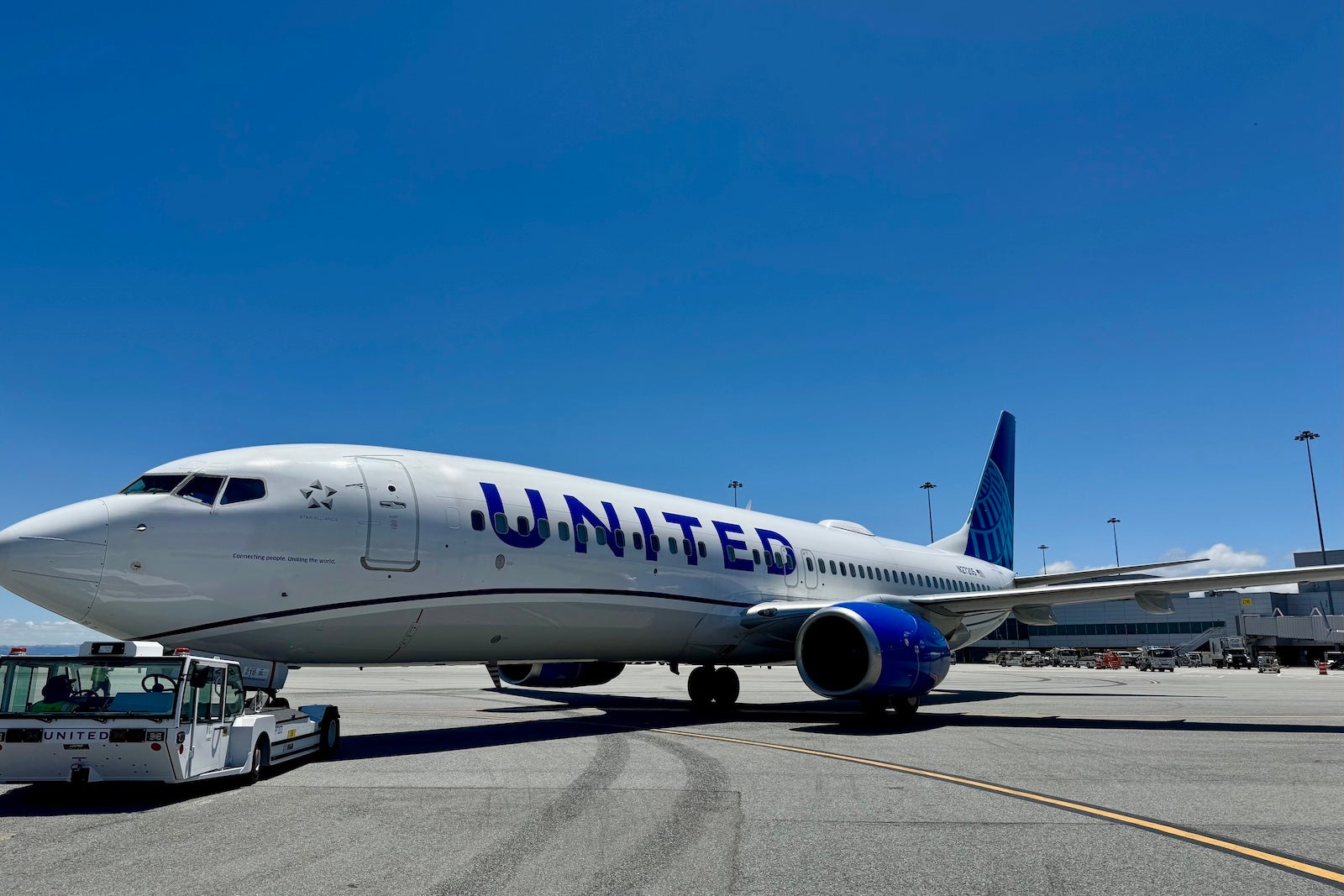
United Airlines is connecting its two West Coast hubs to northern Michigan.
Next summer, the carrier will launch nonstop service to Traverse City, Michigan, from both Los Angeles International Airport (LAX) and San Francisco International Airport (SFO).
The two routes will launch on June 19 and run through the peak summer season, according to details shared Thursday by Cherry Capital Airport (TVC). The airport touted the service as something that would give TVC its "first-ever coast-to-coast nonstop footprint."
Traverse City is a popular summer destination, situated on the banks of Grand Traverse Bay, an arm of Lake Michigan.
The region is also home to the famous National Cherry Festival each summer. That century-old extravaganza — which includes an air show — will feature the U.S. Navy's Blue Angels in 2027.
United will operate its California service to Traverse City on Saturdays through the summer.
However, the carrier will also offer flights on select Wednesdays — including before and after the cherry festival.
United will operate a Boeing 737-800 on the route, according to the airport.
That aircraft features 16 domestic first-class recliners across four rows up front, and 150 seats in the main cabin (the number of extra-legroom Economy Plus seats vary from one jet to another)
While United’s Los Angeles and San Francisco routes to TVC are new, the carrier is no stranger to the region.
United already offers service to the airport from each of its other mainland U.S. hubs — including Chicago, Denver, Houston, and Washington Dulles International Airport (IAD).
On top of the two Traverse City routes, United announced additional new service from San Francisco.
The carrier will launch flights to Jacksonville International Airport (JAX) on March 29. That route will operate twice per week, year-round.
Traverse City and Jacksonville give United a total of seven new routes from its Bay Area hub in just the last couple of weeks.
Several of those flights are new transcontinental service, including routes to Hartford, Conn.; Richmond and Norfolk, Va; and Charleston, S.C.
Qatar’s tourism recovery from the U.S.-Iran war is running on road traffic across the Saudi border, a Skift analysis of Qatar Tourism data shows..
International visitor arrivals in October totaled 336,000, down 10% from the same time last year, according to Qatar Tourism’s monthly arrivals data. September’s arrivals were up 1%. Both are a sharp turnaround from March, when arrivals fell 82% year over year to 63,000.
Qatar received 2.95 million visitors in the first 10 months of 2026, down 24% from 3.9 million in the same period last year.
Road is the only part of Qatar’s arrivals that is growing. Land arrivals, which all come through Qatar’s sole land border with Saudi Arabia, rose 18% year over year in October. Air arrivals fell 19%, registering an eighth straight month of decline.
That matters for hotels and for tourism revenue. Visitors flying in from long-haul markets typically stay longer and spend more than weekend drive-in gu
Subscribe now for complete access to Skift.com’s trusted coverage of the travel industry.
Enter your email for a complimentary article + exclusive offers.
Tags: borders, hotels, qatar, saudi arabia, tourism
LYVGO Atlas illustration — original artwork, not publisher photography.
Most widely reported
1
Aer Lingus flight passenger describes ordeal as plane diverted by bomb hoax
bournemouthecho.co.uk
7 outlets reporting
2
Dublin-Rome flight lands in France amid bomb threat
dw.com
5 outlets reporting
3
Multiple flights in Europe diverted after hoax bomb threats – again
travelweek.ca
4 outlets reporting
4
Bomb threats hit at least 25 European flights, trigger fighter escorts
aerotime.aero
3 outlets reporting
5
Bomb threats hit European aviation for the third day this week
simpleflying.com
3 outlets reporting
6
Emirates stays profitable despite 68% drop amid high fuel prices
aerotime.aero
2 outlets reporting
Every item above is summarised from the source named beside it.
What do you do when clients show up with AI research that doesn’t add up?
Confirmed
Nearly nine in 10 travel advisors have encountered clients armed with AI-generated research, according to a recent survey. More often than not these polished itineraries contain impossible connections, unrealistic budgets, even fictional hotels.
Not yet confirmed
Reported by one outlet so far — not yet corroborated by another.
Today's list
Smart Packing Hacks for Savvy Travelers
Before you hit the airport, make sure you're packing smart to save money on your next trip. From simple swaps to clever tricks, we've got the inside scoop on how to make the most of your travel budget.
1
Roll your clothes
Rolling your clothes instead of folding them can help reduce wrinkles and save you from buying expensive laundry detergent at your destination.
2
Use packing cubes
Packing cubes can help you organize your luggage, compress your clothes, and make the most of your carry-on space, all while keeping your belongings safe and secure.
3
Pack multipurpose items
Choosing items that can serve multiple purposes, such as a sarong that doubles as a blanket or towel, can help reduce the amount of luggage you need to check and save you money on baggage fees.
4
Use travel-sized essentials
Travel-sized essentials, such as toiletries and cosmetics, can help you avoid buying expensive airport duty-free products and reduce your luggage weight.
5
Wear bulky items
Wearing your bulkiest items, such as your coat and boots, can help you save space in your luggage and reduce the amount of checked baggage you need to pay for.
6
Use a refillable water bottle
Refillable water bottles can help you stay hydrated during your journey without buying expensive bottled water at the airport or on the plane.
7
Take advantage of airport freebies
Many airports offer free amenities, such as Wi-Fi, charging stations, and entertainment options, which can help make your travel experience more enjoyable and save you money on unnecessary purchases.
Airline says passenger was late, but can’t prove it: Consumer court awards Delhi flyer ₹71,587
A Delhi passenger who missed a Bengaluru-bound flight after alleging delays by airline staff has been awarded ₹71,587 by the New Delhi District Consumer Disputes Redressal Commission.
Wikimedia Commons · Muhammad Mahdi Karim · GFDL 1.2
The commission ruled in his favour after the airline failed to produce evidence supporting its claim that he had reported late for check-in.
The commission, headed by President Poonam Chaudhry and member Bariq Ahmad, observed that the airline had not submitted CCTV footage or any other material to establish that the passenger arrived late at the check-in counter, The Indian Express reported.
What happened
"... the OP has not placed any cogent evidence like the CCTV footage or any other material to show that the complainant was not on time," the commission said while ruling in the passenger's favour.
The detail
According to the complaint, the passenger had booked a round-trip ticket between Delhi and Bengaluru for June 2025 to attend an urgent office meeting.
The wider picture
45 am flight.
Local impactFollow how this story develops and what it means for you.
Source: Airline says passenger was late, but can’t prove it: Consumer court awards Delhi flyer ₹71,587, details inside (livemint.com) · Nov 5, 2026
What to do next
Read more about this topic on LYVGO.
See related stories from the same desk.
Follow this developing story for the latest updates.







































Comments