








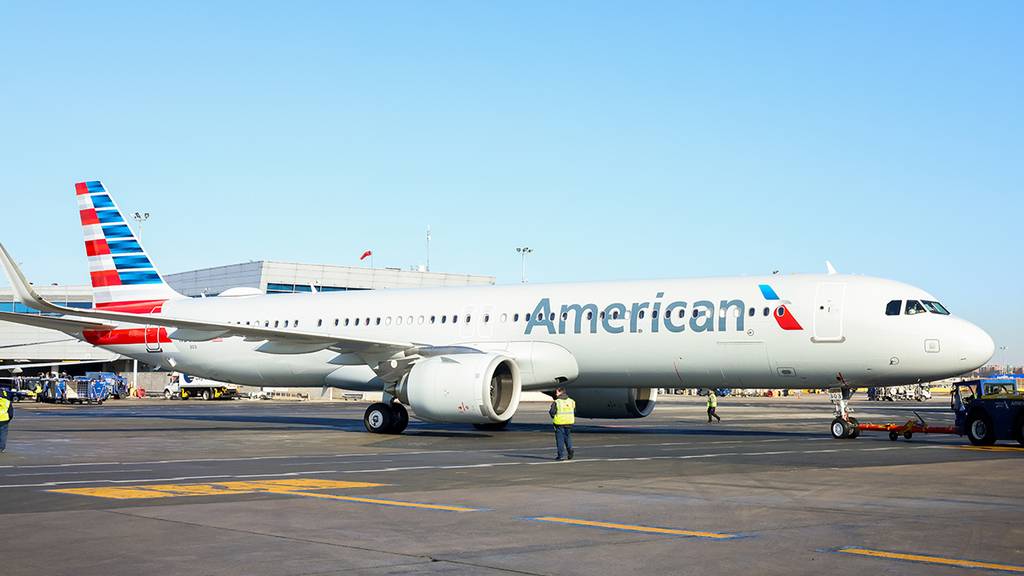

















American Airlines operates two versions of the Airbus A321neo that look broadly similar to passengers but cannot be made identical. 10 aircraft acquired from Alaska Airlines have a different emergency-exit arrangement from the airline’s factory-delivered A321neos, a structural feature inherited from their original design. Even after American refurbished the former Alaska jets with its standard Oasis cabin, the fuselage layout prevented the airline from matching the larger subfleet’s seating capacity and seat locations.
The result is a small but persistent source of inconsistency across American’s narrowbody operation. Both versions are presented under the same 32Q fleet code, yet they have different total seat counts, exit rows, and cabin details. Passengers selecting seats based on a particular map may therefore find that an aircraft substitution changes the location of extra-legroom seating or places them in a different part of the cabin. For the airline, the challenge is not simply maintaining two interiors.
What happened
It is operating a single fleet designation across aircraft whose underlying layouts cannot be standardized through a conventional cabin retrofit.
The detail
When Alaska later moved to simplify its operations around Boeing narrowbodies, it retired the 10 A321neos and sold them to American in 2023.
The wider picture
6 years old when Alaska retired them. Purchasing an existing group offered American access to additional A321neo capacity without waiting for new production slots, which were already constrained by strong global demand for the type.
What comes next
The aircraft began entering American’s operation in spring 2024, initially flying from Miami with much of Alaska’s original cabin still intact. At that stage, they had 190 seats, including 16 in first class and 174 in the main cabin. The layout offered a more spacious experience than American’s standard A321neo, with greater seat pitch in several sections, but fewer first class places for complimentary upgrades.
Additional context
American’s acquisition was therefore a practical fleet decision, not a plan to create a permanently distinct passenger product. The airline intended to bring the aircraft closer to its established domestic configuration. However, the jets’ original door arrangement would prove to be the limiting factor. The timing also offered an opportunity to add capacity relatively quickly. New aircraft deliveries require production slots, financing, and time to enter service, whereas the former Alaska jets were already built and had accumulated comparatively little operating history.
Analysis
Their acquisition helped American expand its narrowbody resources while it awaited additional Airbus deliveries. The trade-off was accepting a small group of aircraft whose design would complicate efforts to maintain a uniform cabin.
Reactions
The core of the problem is the development of Airbus Cabin Flex, or ACF. Early A321neo aircraft were built with a door arrangement broadly resembling the previous-generation A321ceo: four main passenger doors on each side of the fuselage, including an additional pair positioned ahead of the wing. The 10 former Alaska aircraft belong to this earlier A321neo configuration. Airbus introduced Cabin Flex to give airlines more freedom over cabin layouts and passenger capacity.
Developments
The redesign removed the second pair of full-size doors and introduced modified overwing emergency exits, alongside changes to the rear fuselage and door positions. This created additional usable cabin space and allowed airlines to install more seats while meeting evacuation requirements. Airbus said the ACF arrangement could support configurations of up to 240 passengers, depending on the chosen layout.
Developments · 2
The revised design became standard on later A321neo production, but the former Alaska aircraft were built before that transition. Their physical structure cannot be converted into the later Cabin Flex arrangement through a normal interior refurbishment. Changing the exit layout would require extensive structural work, certification, and significant investment, making a full conversion commercially impractical for a group of only 10 aircraft. American’s larger fleet is made up of A321-200NX aircraft, while the former Alaska jets are classified as A321-200N models.
Developments · 3
The suffix reflects a difference in the airframe configuration, not merely the airline’s choice of seats or cabin finishes.
Developments · 4
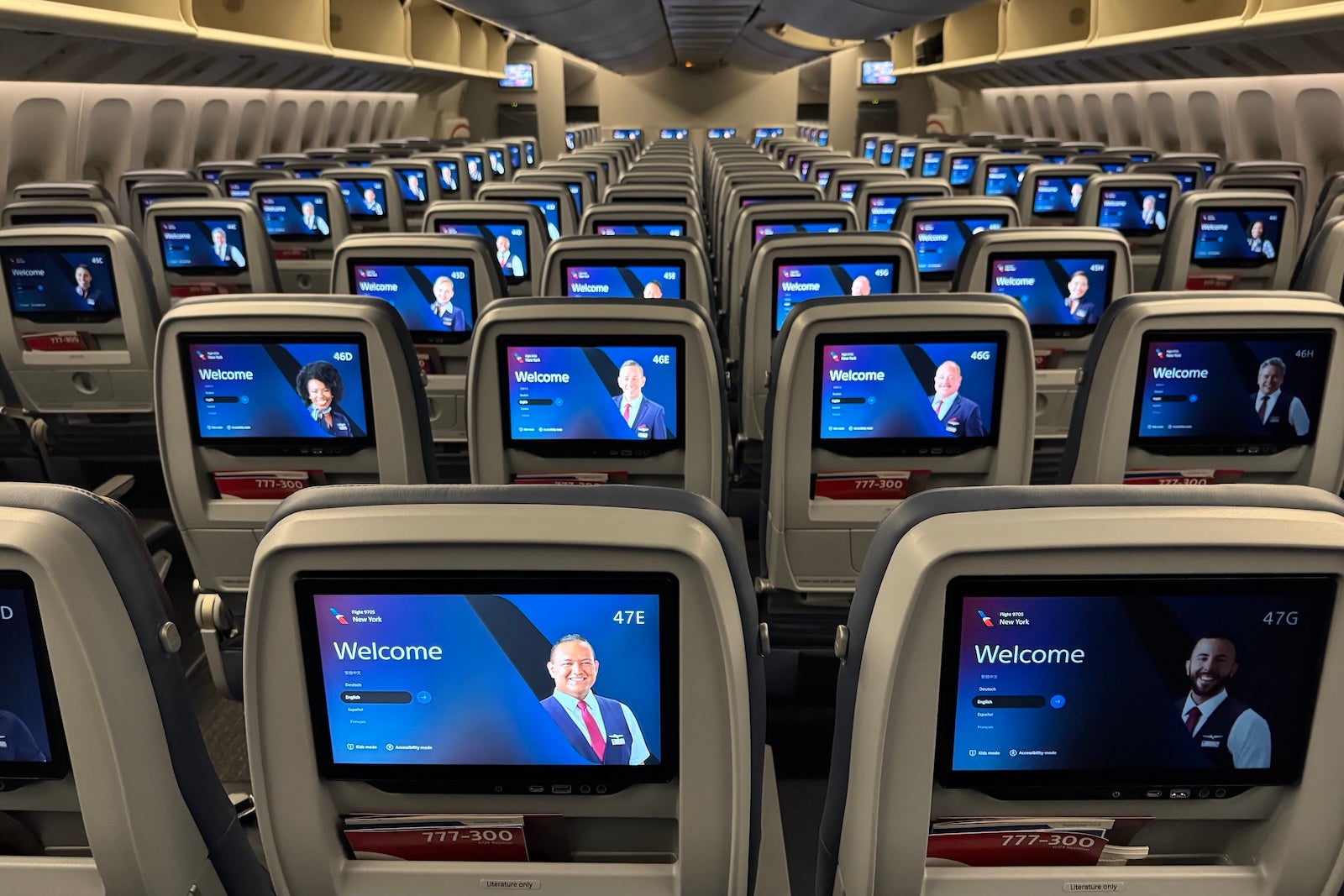
American began bringing the former Alaska aircraft into its standard interior in 2024, with N950XV among the first to undergo the work in San Antonio. The retrofit replaced the inherited cabin with the airline’s Oasis-style arrangement, aligning the passenger experience more closely with other domestic A321s. However, the door configuration remained unchanged, limiting how many seats could be installed and where certain rows could be positioned.
Developments · 5
After the refurbishment, each former Alaska A321neo has 190 seats. The airline’s 196-seat A321neo configuration has the same number of first class seats, but accommodates more in the main cabin. Six additional economy seats distinguish the larger group. The former Alaska aircraft effectively retain the capacity of American’s older A321ceo domestic layout, despite being newer-generation aircraft with more efficient engines.
Developments · 6
The original Alaska cabin had fewer first class seats and more generous spacing in several sections, but American’s standardization work increased first class from 16 to 20 seats and brought economy seating closer to the airline’s usual density. Passengers no longer receive the same broad spacing advantage associated with the aircraft’s initial configuration, but the aircraft still cannot carry as many passengers as the ACF-equipped A321neos.
Developments · 7
For American, the six-seat shortfall is a permanent capacity constraint on each of the 10 aircraft. The figure is modest relative to the airline’s overall operation, but it illustrates how a seemingly small design difference can affect revenue potential over thousands of flights. There is also a cabin-planning consequence. American has to accommodate the same general product standards within a narrower seating footprint, rather than simply copying the exact arrangement used on its newer aircraft. The result is a familiar-looking cabin with a different internal map.
Developments · 8
Passengers may notice little difference in the overall appearance, but the location of individual seats remains tied to the original aircraft design.
Developments · 9
The practical consequence is most visible when passengers select seats. American groups both A321neo versions under the same 32Q fleet code, so the booking process does not always make the underlying configuration obvious. Yet the exit rows occupy different positions because the doors and emergency exits are arranged differently. According to SeatCompare’s 2026 guide, the 196-seat A321neo has exit rows at 17 and 27. On the 10 former Alaska aircraft, the corresponding rows are 11 and 24.
Developments · 10
The differences extend beyond emergency exits. The seat maps have different last rows, with row 37 on the 196-seat aircraft and row 36 on the former Alaska jets. Lavatory placement also changes the available seats near the rear of the cabin. SeatCompare notes that the port-side lavatory block removes different A-C positions in the two configurations, meaning the cabin columns do not line up in the same way from one aircraft to the other. Some seats are also narrower or have restricted recline, but the affected rows vary by version.
Developments · 11
As a result, a passenger comparing seat maps needs more than the aircraft name to identify the best option. The registration numbers N950XV through N959XV identify the former Alaska group.
Developments · 12
Maintaining two cabin layouts within one fleet code creates work for American’s reservation systems, airport teams, and customers. Seat maps must accurately reflect the aircraft assigned to a flight, while operational substitutions can make a previously selected seat unavailable or alter its characteristics. While aircraft swaps are a normal part of airline operations, the fleet differences can cause some challenges.
Developments · 13
There are also commercial reasons for American to retain the aircraft rather than retire or substantially rebuild them. They are comparatively young, use the same engine family as the airline’s other A321neos, and provide useful capacity on domestic routes. Replacing them would require acquiring aircraft or reallocating existing capacity, while a structural conversion would be costly and difficult to justify for just 10 frames.
Developments · 14
American’s larger A321neo fleet is also expanding. ch-aviation reported in February 2026 that the airline operated 75 A321-200NX aircraft alongside the 10 A321-200N jets, with additional standard-range A321neos and XLRs on order. As new aircraft arrive, the former Alaska group will represent a smaller proportion of the overall A321neo fleet, but the configuration mismatch will remain as long as those 10 aircraft continue flying.
Developments · 15
American’s former Alaska A321neos demonstrate how aircraft standardization has limits when airlines inherit equipment designed around a different specification. The Oasis retrofit brought their interiors closer to the rest of the fleet, but no cabin refresh can relocate doors or reproduce the Cabin Flex fuselage. Their six-seat capacity gap and alternative exit-row positions are therefore likely to persist.
Developments · 16
As American receives more A321neo aircraft, the 10 jets should become a smaller share of the overall fleet.
Local impactFollow how this story develops and what it means for you.
Source: American Airlines Has A Unique Airbus A321neo Subfleet That Unavoidably Breaks Daily Consistency (simpleflying.com) · Nov 10, 2026
What to do next
- Read more about this topic on LYVGO.
- See related stories from the same desk.
- Follow this developing story for the latest updates.
Comments